
UX Research Report Template: Free Findings Report for UX Researchers
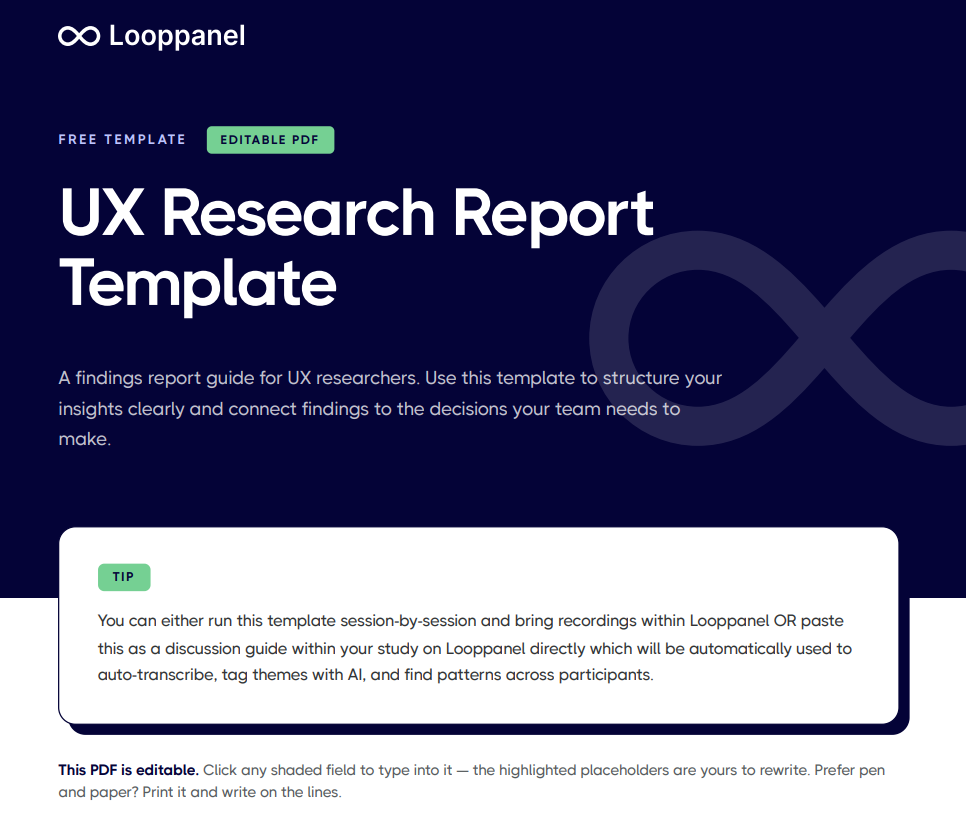
Present findings stakeholders act on with the free UX research report template in Looppanel, built for UX researchers reporting to product and design teams. It structures your executive summary, key findings by theme, evidence and recommendations, so the reports stay tied to evidence instead of ending as a deck nobody opens.





Frequently Asked Questions
What should a UX research report include?
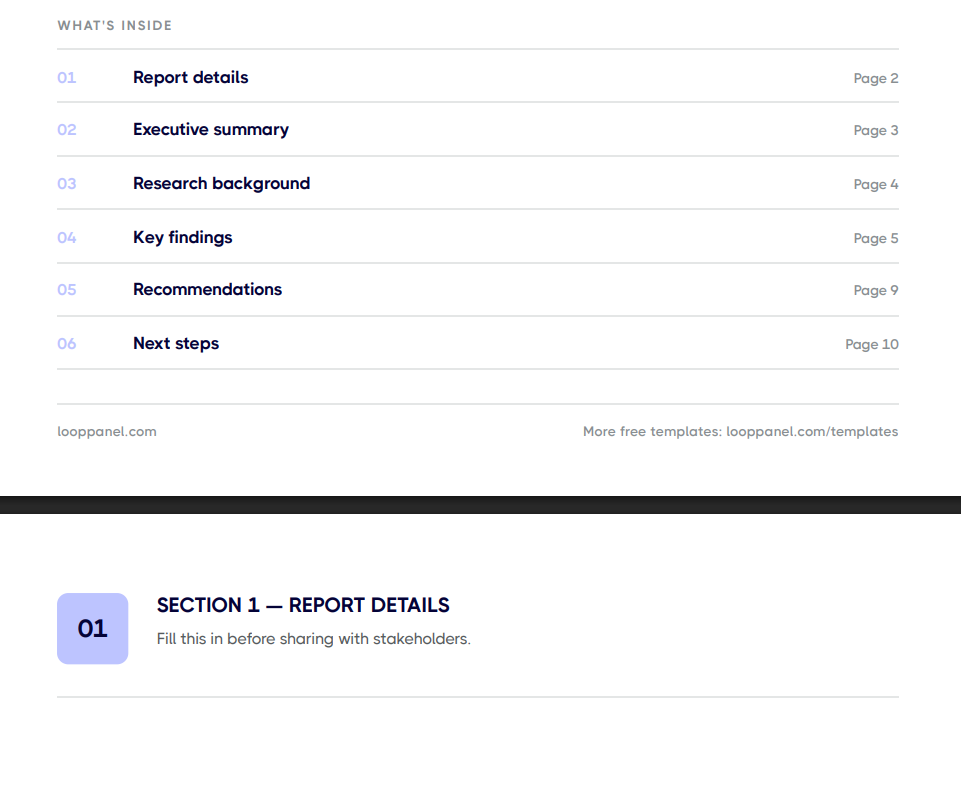
A UX research report should include an executive summary with the top findings and recommendations, the research background covering goals and method, the participant profile, the key findings organized by theme with supporting quotes and evidence, the implications for product or design decisions, and suggested next steps.
How long should a UX research report be?
For most studies, 5 to 10 pages covers the findings without overwhelming stakeholders. An executive summary of one page is essential for senior audiences who will not read the full report. For large-scale studies, a two-tier format works well: a short slide deck for presentation and a longer document as the supporting reference.
How do you structure UX research findings?
Lead with the most important finding, not with methodology. Group findings by theme rather than by question or by participant. Support each finding with at least one direct quote and a note on how many participants it reflects. Close each finding with an implication or recommendation so the report tells stakeholders what to do, not just what was observed.
How do you present UX research to stakeholders who do not have time to read a full report?
Lead with a one-page or one-slide executive summary that covers the top three findings and the most urgent recommendation. Use a slide deck for live presentations and provide the full report as a reference document. Make it easy for stakeholders to find the specific finding relevant to their area without reading the whole thing.
What is the difference between a UX research report and a research debrief?
A research debrief is typically a shorter, more informal readout that happens immediately after fieldwork, often within the research team. A UX research report is a more formal, polished document intended for stakeholders. Debriefs are faster and more collaborative. Reports are more structured and designed to be referenced over time.
How does Looppanel help with writing a UX research report?
Looppanel auto-transcribes sessions and lets you tag themes with the help of AI. You can pull supporting quotes directly from the tag view within minutes, replacing the most time-consuming part of report writing: going back through recordings to find evidence.
Should research sessions be recorded for report writing?
Yes, whenever participants consent to it. Recordings give you the exact quotes your report needs. Also with Looppanel Notetaker, you can bookmark important moments followed by AI notes pulled for your report guide, so your evidence is organized before you start writing.
Stay in the loop
Get the latest news and jobs in UX, in your inbox every two weeks.

.svg)


