
Stakeholder Interview Template: Free Discussion Guide for UX Researchers
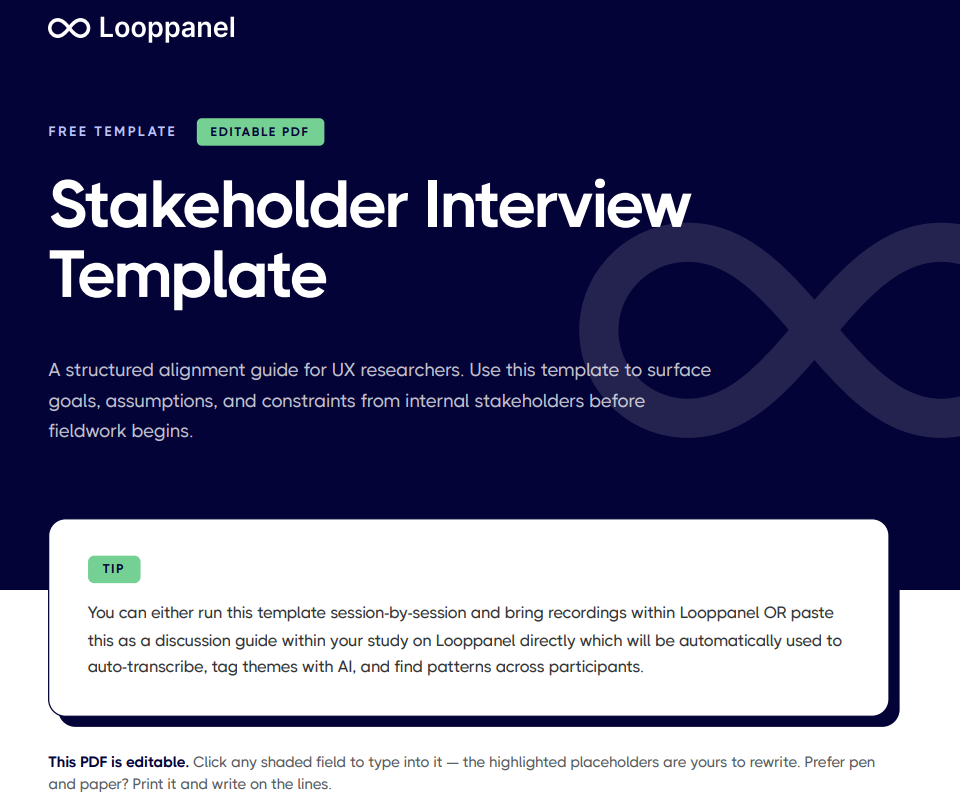
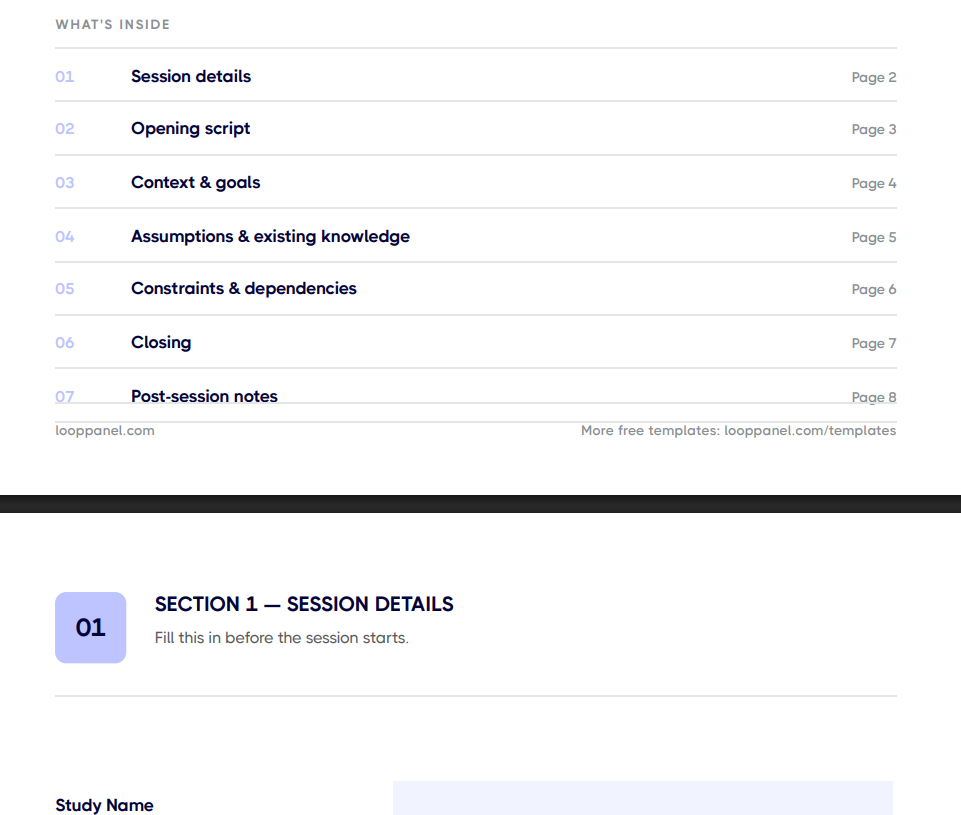
Align your team before fieldwork with the free stakeholder interview template in Looppanel, built for UX researchers and PMs at kickoff. It covers business goals, assumptions, decisions the research will inform, and known constraints so your findings land instead of getting dismissed.




Frequently Asked Questions
What is a stakeholder interview in UX research?
A stakeholder interview is a structured conversation with internal team members, executives, or other decision-makers before a research study begins. It surfaces business goals, assumptions, constraints, and success criteria that shape what the research needs to answer.
What questions should a stakeholder interview template include?
A stakeholder interview should include questions about the business context and goals, what the stakeholder already believes is true about the user or problem, what decisions the research will inform, what a successful outcome looks like, and any constraints such as timeline, budget, or technical limitations.
Why should researchers interview stakeholders before a study?
Stakeholder interviews align the team on what question the research is actually trying to answer. They surface conflicting assumptions early, when they are cheap to resolve, rather than after fieldwork is complete. They also increase the likelihood that findings will be acted on because stakeholders have had input into the study design.
How long should a stakeholder interview take?
Stakeholder interviews typically run 30 to 45 minutes. They are shorter than user interviews because the goal is alignment rather than deep exploration. A focused 30-minute session is more respectful of a busy stakeholder's time and more likely to happen than an open-ended 60-minute block.
Who should be interviewed as a stakeholder before a UX study?
At minimum, the product manager or owner commissioning the research. Depending on the scope, this may also include the engineering lead, a sales or customer success representative, a marketing lead, and any executive sponsors. The goal is to capture the range of goals and constraints that the research needs to serve.
How do you synthesize stakeholder interview data?
After your stakeholder sessions, tag observations and quotes into themes, look for patterns in goals and assumptions, and note where stakeholders conflict. Looppanel can transcribe and tag these sessions with the help of AI the same way it handles user interviews, so alignment gaps surface in minutes.
Should stakeholder interviews be recorded?
Yes, whenever participants consent. Recordings let you focus on the conversation rather than your notes, catch nuances you might miss, and create a reference you can share with team members who were not in the session. Also with Looppanel Notetaker, you can bookmark important moments followed by AI notes pulled for your stakeholder interview guide.
Stay in the loop
Get the latest news and jobs in UX, in your inbox every two weeks.

.svg)


